
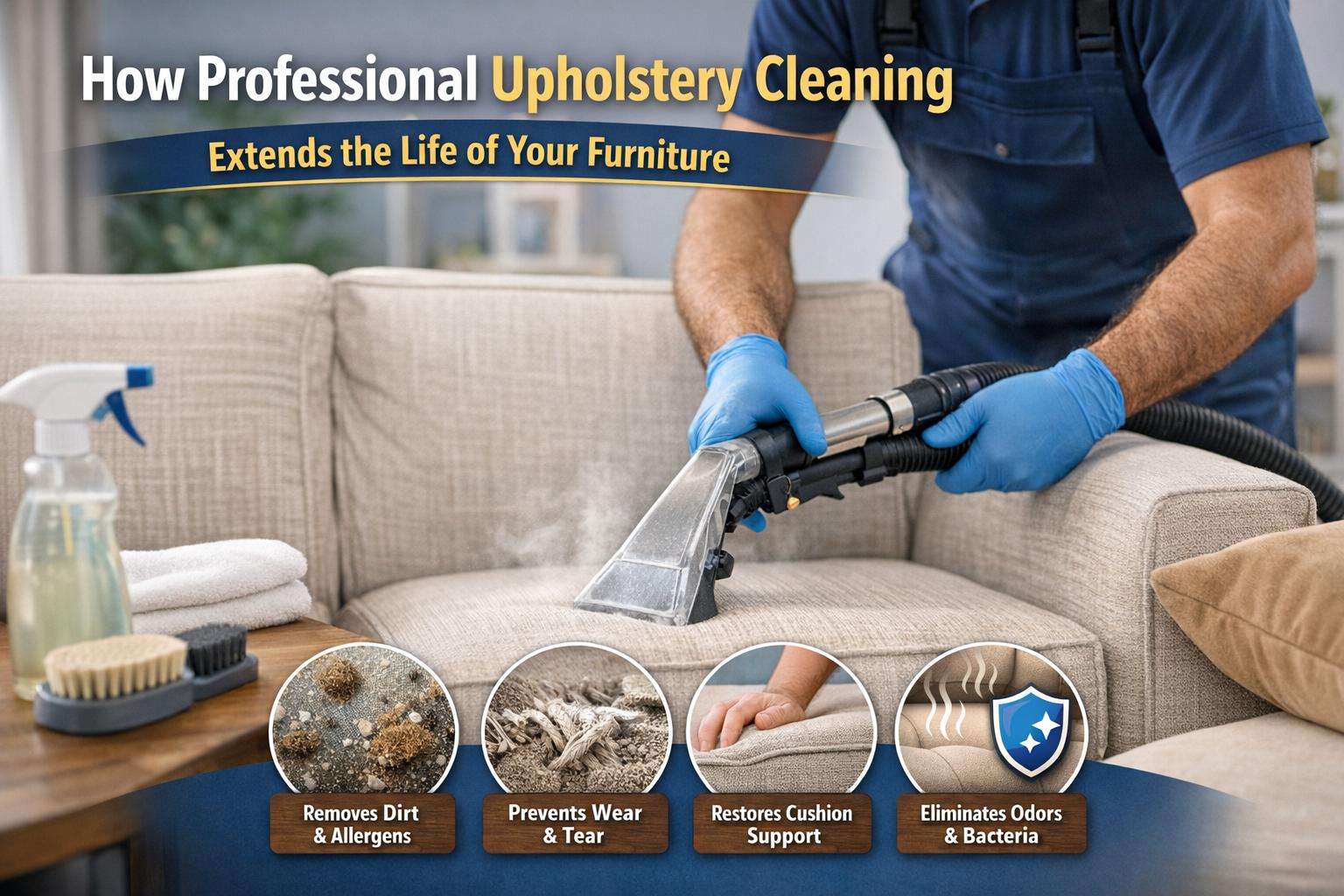
Professional upholstery cleaning does more than improve appearance—it plays a major role in extending the life of your furniture. Over time, dirt, oils, and fine grit break down fabric fibers and cushion support. Regular professional cleaning removes these damaging contaminants before they cause premature wear or costly replacement.
Professional upholstery cleaning isn’t just about appearance. Done correctly and at the right intervals, it protects fabric fibers, preserves cushion support, and prevents premature wear, helping furniture last years longer than routine vacuuming alone.
Below, we break down exactly how—and why—professional upholstery cleaning makes a measurable difference.
How Professional Upholstery Cleaning Prevents Hidden Fabric Wear
Even when upholstery looks “clean,” damaging soil is often embedded deep in the fabric.
Microscopic dirt particles act like sandpaper. Every time someone sits down, shifts, or gets up, those particles grind against fabric fibers. Over time, this causes:
- Fiber thinning and fraying
- Flattened or matted upholstery
- Premature wear patterns on arms, cushions, and seat backs
Regular vacuuming removes surface debris, but it cannot fully extract embedded grit packed into upholstery by daily use.
Professional upholstery cleaning removes this abrasive soil at the fiber level—before permanent damage sets in.
Why Professional Upholstery Cleaning Removes Damaging Body Oils
Upholstery absorbs more than dust.
Natural body oils, sweat, pet dander, hair products, and airborne grease slowly bond to fabric fibers. As these oils accumulate, they:
- Attract and trap more dirt
- Weaken fibers over time
- Cause darkening, discoloration, and uneven wear
DIY cleaners often push oils deeper into the fabric or leave sticky residues that accelerate resoiling. Professional cleaning breaks this bond safely—lifting oils out without damaging delicate fibers.
Professional Upholstery Cleaning vs DIY Methods
Home upholstery machines and store‑bought cleaners can do more harm than good when used incorrectly.
Common problems include:
- Over‑wetting cushions and padding
- Leaving detergent residue behind
- Using the wrong chemistry for the fabric type
- Shrinking, bleeding, or setting stains permanently
Professional technicians identify the material first—synthetic, cotton blend, wool, microfiber, or specialty fabrics—then apply the appropriate method. This prevents fiber damage while achieving a deeper, safer clean.
Cushion Support & Structure Matter Too
Furniture wear isn’t just on the surface.
As soil settles into cushions and padding, it breaks down internal support materials. Over time this leads to:
- Sagging seating
- Uneven cushion wear
- Reduced comfort and support
Professional upholstery cleaning extracts contaminants from below the surface layer, helping cushions maintain their shape, resilience, and structural integrity longer.
Odor Control & Fabric Health
Odors aren’t just unpleasant—they’re a sign of contamination.
Pet odors, food spills, smoke, and moisture can create long‑term problems inside upholstery if left untreated. Professional cleaning removes the source, not just the smell, helping prevent:
- Bacterial buildup
- Mold risks from trapped moisture
- Ongoing odor rebound
This is especially important for homes with pets, kids, or shared commercial seating.
How Often Should Upholstery Be Professionally Cleaned?
While usage varies, general guidelines are:
- Homes: Every 12–18 months
- Pet households: Every 6–12 months
- Offices & commercial seating: Every 6–9 months
- Light‑colored / high‑use furniture: More frequently
Regular professional cleaning delays replacement, preserves appearance, and protects your investment.
Why Professional Upholstery Cleaning Is Cheaper Than Replacement
Replacing upholstered furniture is expensive—and often unnecessary.
Routine professional upholstery cleaning helps you:
- Extend furniture life by years
- Maintain comfort and support
- Keep fabrics looking newer longer
- Delay costly replacement purchases
From a cost‑of‑ownership standpoint, professional cleaning is one of the most affordable asset‑protection services for your home or business.
Why Experience Matters in Upholstery Cleaning
Not all upholstery cleaners are the same.
Proper training, correct equipment, fabric knowledge, and real‑world experience make the difference between safe restoration and accidental damage. An experienced local provider understands:
- Fabric sensitivities
- Safe moisture levels
- Proper extraction and drying
- Prevention of res-soiling issues
That expertise is what protects furniture—not just cleans it.
Protect Your Furniture Investment
Upholstered furniture is meant to be lived on—but it still needs professional care.
With routine upholstery cleaning, you’re not just removing dirt. You’re protecting fibers, preserving comfort, and extending the useful life of some of the most used items in your space.
If your furniture feels dull, looks worn before its time, or hasn’t been professionally cleaned in years, it’s likely overdue.
Related Services:
- Carpet Cleaning
- Upholstery Cleaning
- Mattress Cleaning
- Pet Odor & Stain Removal
- Area Rug Cleaning
Upholstery Cleaning FAQ
How does professional upholstery cleaning extend the life of furniture?
Professional upholstery cleaning removes deep‑down dirt, grit, and body oils that slowly wear down fabric fibers. By eliminating abrasive soil and residue, professional cleaning reduces fiber breakdown, prevents premature thinning, and helps cushions and upholstery maintain their structure longer.
Is professional upholstery cleaning better than vacuuming?
Vacuuming removes surface debris only. Professional upholstery cleaning extracts embedded soil, oils, and allergens that vacuums cannot reach. This deeper cleaning protects fabric fibers, prevents rapid re-soiling, and helps furniture last significantly longer than vacuuming alone.
Can dirty upholstery really damage furniture?
Yes. Dirt particles trapped in upholstery act like sandpaper when people sit or move on furniture. Over time, this friction causes fibers to fray, flatten, and weaken. Without professional cleaning, upholstery can wear out years earlier than expected—even if it appears clean.
How often should upholstery be professionally cleaned?
Most upholstered furniture should be professionally cleaned every 12–18 months. Homes with pets, children, or heavy use benefit from cleaning every 6–12 months. Regular professional cleaning prevents long‑term fiber damage and reduces the need for early furniture replacement.
Can DIY upholstery cleaning shorten furniture lifespan?
Yes. Professional upholstery cleaning removes odor‑causing bacteria, pet oils, and trapped contaminants from within the fabric—not just at the surface. This helps prevent lingering smells, moisture issues, and fabric deterioration that can occur when odors are only masked.
Is it cheaper to clean upholstery or replace furniture?
Professional upholstery cleaning is far more cost‑effective than replacement. Regular cleaning extends furniture lifespan, preserves comfort, and delays costly purchases. In most cases, routine professional cleaning costs a fraction of replacing sofas, chairs, or commercial seating.
What We Do About It
Humboldt carpets take a specific kind of beating — rain tracked in nine months of the year, beach sand from Clam Beach and Moonstone, and enough damp that nothing dries on its own. That combination grinds fiber down fast.
Our carpet division uses truck-mounted steam extraction with IICRC-trained technicians. $59.00 per room. We work Eureka, Arcata, McKinleyville, Fortuna, Trinidad, Ferndale and Scotia.
Book a cleaning when you are ready: Call 707-442-3229 or book online any time.
