Professional upholstery cleaning does more than improve appearance—it plays a major role in extending the life of your furniture. Over time, dirt, oils, and fine grit break down fabric fibers and cushion support. Regular professional cleaning removes these damaging contaminants before they cause premature wear or costly replacement.
Professional upholstery cleaning isn’t just about appearance. Done correctly and at the right intervals, it protects fabric fibers, preserves cushion support, and prevents premature wear, helping furniture last years longer than routine vacuuming alone.
Below, we break down exactly how—and why—professional upholstery cleaning makes a measurable difference.
How Professional Upholstery Cleaning Prevents Hidden Fabric Wear
Even when upholstery looks “clean,” damaging soil is often embedded deep in the fabric.
Microscopic dirt particles act like sandpaper. Every time someone sits down, shifts, or gets up, those particles grind against fabric fibers. Over time, this causes:
Fiber thinning and fraying
Flattened or matted upholstery
Premature wear patterns on arms, cushions, and seat backs
Regular vacuuming removes surface debris, but it cannot fully extract embedded grit packed into upholstery by daily use.
Professional upholstery cleaning removes this abrasive soil at the fiber level—before permanent damage sets in.
Why Professional Upholstery Cleaning Removes Damaging Body Oils
Upholstery absorbs more than dust.
Natural body oils, sweat, pet dander, hair products, and airborne grease slowly bond to fabric fibers. As these oils accumulate, they:
Attract and trap more dirt
Weaken fibers over time
Cause darkening, discoloration, and uneven wear
DIY cleaners often push oils deeper into the fabric or leave sticky residues that accelerate resoiling. Professional cleaning breaks this bond safely—lifting oils out without damaging delicate fibers.
Professional Upholstery Cleaning vs DIY Methods
Home upholstery machines and store‑bought cleaners can do more harm than good when used incorrectly.
Common problems include:
Over‑wetting cushions and padding
Leaving detergent residue behind
Using the wrong chemistry for the fabric type
Shrinking, bleeding, or setting stains permanently
Professional technicians identify the material first—synthetic, cotton blend, wool, microfiber, or specialty fabrics—then apply the appropriate method. This prevents fiber damage while achieving a deeper, safer clean.
Cushion Support & Structure Matter Too
Furniture wear isn’t just on the surface.
As soil settles into cushions and padding, it breaks down internal support materials. Over time this leads to:
Sagging seating
Uneven cushion wear
Reduced comfort and support
Professional upholstery cleaning extracts contaminants from below the surface layer, helping cushions maintain their shape, resilience, and structural integrity longer.
Odor Control & Fabric Health
Odors aren’t just unpleasant—they’re a sign of contamination.
Pet odors, food spills, smoke, and moisture can create long‑term problems inside upholstery if left untreated. Professional cleaning removes the source, not just the smell, helping prevent:
Bacterial buildup
Mold risks from trapped moisture
Ongoing odor rebound
This is especially important for homes with pets, kids, or shared commercial seating.
How Often Should Upholstery Be Professionally Cleaned?
While usage varies, general guidelines are:
Homes: Every 12–18 months
Pet households: Every 6–12 months
Offices & commercial seating: Every 6–9 months
Light‑colored / high‑use furniture: More frequently
Regular professional cleaning delays replacement, preserves appearance, and protects your investment.
Why Professional Upholstery Cleaning Is Cheaper Than Replacement
Replacing upholstered furniture is expensive—and often unnecessary.
Routine professional upholstery cleaning helps you:
Extend furniture life by years
Maintain comfort and support
Keep fabrics looking newer longer
Delay costly replacement purchases
From a cost‑of‑ownership standpoint, professional cleaning is one of the most affordable asset‑protection services for your home or business.
Why Experience Matters in Upholstery Cleaning
Not all upholstery cleaners are the same.
Proper training, correct equipment, fabric knowledge, and real‑world experience make the difference between safe restoration and accidental damage. An experienced local provider understands:
Fabric sensitivities
Safe moisture levels
Proper extraction and drying
Prevention of res-soiling issues
That expertise is what protects furniture—not just cleans it.
Protect Your Furniture Investment
Upholstered furniture is meant to be lived on—but it still needs professional care.
With routine upholstery cleaning, you’re not just removing dirt. You’re protecting fibers, preserving comfort, and extending the useful life of some of the most used items in your space.
If your furniture feels dull, looks worn before its time, or hasn’t been professionally cleaned in years, it’s likely overdue.
How does professional upholstery cleaning extend the life of furniture?
Professional upholstery cleaning removes deep‑down dirt, grit, and body oils that slowly wear down fabric fibers. By eliminating abrasive soil and residue, professional cleaning reduces fiber breakdown, prevents premature thinning, and helps cushions and upholstery maintain their structure longer.
Is professional upholstery cleaning better than vacuuming?
Vacuuming removes surface debris only. Professional upholstery cleaning extracts embedded soil, oils, and allergens that vacuums cannot reach. This deeper cleaning protects fabric fibers, prevents rapid re-soiling, and helps furniture last significantly longer than vacuuming alone.
Can dirty upholstery really damage furniture?
Yes. Dirt particles trapped in upholstery act like sandpaper when people sit or move on furniture. Over time, this friction causes fibers to fray, flatten, and weaken. Without professional cleaning, upholstery can wear out years earlier than expected—even if it appears clean.
How often should upholstery be professionally cleaned?
Most upholstered furniture should be professionally cleaned every 12–18 months. Homes with pets, children, or heavy use benefit from cleaning every 6–12 months. Regular professional cleaning prevents long‑term fiber damage and reduces the need for early furniture replacement.
Can DIY upholstery cleaning shorten furniture lifespan?
Yes. Professional upholstery cleaning removes odor‑causing bacteria, pet oils, and trapped contaminants from within the fabric—not just at the surface. This helps prevent lingering smells, moisture issues, and fabric deterioration that can occur when odors are only masked.
Is it cheaper to clean upholstery or replace furniture?
Professional upholstery cleaning is far more cost‑effective than replacement. Regular cleaning extends furniture lifespan, preserves comfort, and delays costly purchases. In most cases, routine professional cleaning costs a fraction of replacing sofas, chairs, or commercial seating.
What We Do About It
Humboldt carpets take a specific kind of beating — rain tracked in nine months of the year, beach sand from Clam Beach and Moonstone, and enough damp that nothing dries on its own. That combination grinds fiber down fast.
Our carpet division uses truck-mounted steam extraction with IICRC-trained technicians. $59.00 per room. We work Eureka, Arcata, McKinleyville, Fortuna, Trinidad, Ferndale and Scotia.
Cleaning the house is one of those things that most people just don’t like to do. Getting out the rubber gloves, smelling all of the chemicals and spot cleaning with a toothbrush isn’t exactly the most appealing activity.
However, different areas in your house can be a breeding ground for bacteria, mold and fungus. Places you didn’t know were hazardous like your kitchen and bathroom sinks can become some of the most disgusting places.
So how often, exactly, should you clean each area of the home? We’ve got your answers!
Living Rooms
Your living rooms are naturally some of the cleanest parts of the home. However, we can track dirt in or kids and pets can make spills, so it’s best to keep up with this area fairly often. Here’s how often you should clean things in your living room.
Carpet
Once a week: Your carpet is a place where dust, dirt and allergens tend to hide. Giving your floors a weekly clean with a good-quality vacuum cleaner is super important. In places with constant foot traffic, you may want to vacuum more than once a week.
Protip: If you need to spot clean a stain, you can mix a teaspoon of liquid dish detergent with a quart of warm water and teaspoon of white vinegar. Apply this mixture on the spot and then rinse and blot dry!
Couch
Once every two weeks: Most people don’t realize how much dirt, dust, fur and oils your furniture absorbs. It can host allergens and other nasty things if left unattended. Regular cleaning can help extend the life of your furniture, which means a surface cleaning every couple of weeks using the upholstery attachment on your vacuum.
Protip: You should also plan to have a professional clean the upholstery about once a year, depending on how much you use the piece of furniture. If you develop a stain in between cleanings, put your iron on the “steam” setting and wave it back and forth over the problem spot.
Windows and Blinds
Once a month: The windows and blinds in your house can accumulate dust and dirt. To keep the mess at bay, you should try to wipe down your windows and blinds at least once a month.
Protip: When cleaning your blinds, you can use an old sock dipped in a 50/50 solution of vinegar and water. Stick your hand inside the sock and swipe it over each blind for a quick and easy clean.
Ceiling Fans
Once a month: Have you ever had dust accumulate on the blades of your ceiling fan? Since it’s so high up, many people forget that it’s up there until the dust bunnies have already taken over and interfered with the function of the fan. To prevent dust buildup, clean the top of your fan once a week.
Protip: You can prevent the dust from falling everywhere if you slide each fan blade into a pillowcase, enclose the case around it, then slide it off.
Furthermore, make sure you have a ladder that lets you reach high enough to comfortably reach the fan without pulling on it. Otherwise you may potentially break the wire fixtures, requiring emergency electrician options to fix or replace it.
Baseboards
Once a month: Your baseboards can collect dust and dirt, but most homeowners don’t see cleaning the baseboards as a priority. If you keep up with cleaning them once a month the task won’t be too time-consuming.
Protip: Use the brush attachment on your vacuum to swipe the top edge where the dust settles. If there are scuffs or spills, wipe them away with an erasing sponge.
Fireplace
Once or twice a year: If you own a fireplace, it is most likely that you would use it mainly in the winters. Cleaning it once a year, preferably just before or after the entire timespan of you using it, can be ideal. The same goes with the chimneys.
Protip: Do not try to clean your fireplace by yourself. There can be a high chance of you getting the dust and soot everywhere and not really getting anything cleaned. Instead, you can hire professionals for Milwaukee chimney sweeping services (or based on your location), and let the experts handle the job.
Bedrooms
Your bedroom may accumulate more germs than you realize. Since you spend a good amount of time here (approximately one-third of your life), it tends to accumulate germs. How often exactly should you clean your sleeping quarters? We explain here.
Bed Linens
Once a week: Bed sheets can accumulate a serious collection of sweat, body oils, dirt from outside, and more. When they get too dirty they can become a breeding ground for bacteria and fungi. Those are not things you want sharing a bed with you! While most people wash their sheets only every four weeks, experts recommend washing them once a week.
Protip: If you have white sheets, toss a squeeze of lemon juice in the washer. It’s a natural brightener without the chemicals in bleach products.
Duvet Cover
Once a month: If you use a top sheet you can get away with washing your duvet cover once a month. If you don’t, you may want to wash it every two weeks just to be safe. Like pillows and bed linens, duvet covers can be a breeding ground for bacteria, fungus and dust mites.
Protip: Changing a duvet cover is on most people’s list of top annoying things, but did you know there is a simple hack to make the job easier? Use the burrito method for an easy switcharoo. Turn your duvet cover inside out and place comforter on top. Roll it up, tuck it in, and unroll it-it’s magically on!
Mattress
Every three months: Your mattress is another thing that can accumulate sweat, dust, dust mites and allergens quite easily. To keep the bacteria and fungi at bay, clean your mattress with the seasons. You can use the upholstery attachment to vacuum the mattress, and clean its cover (if it has one).
Protip: Spot clean oil stains or food spills with a mix of baking soda, salt and water. Cover the stain, let it sit for 30 minutes then wipe it away with a damp cloth.
This might not always be the best way forward, you have to know when your mattress has had enough and you need to upgrade. There are plenty of places to find a new mattress online. Perhaps it is a better bet to find some reviews of styles and materials so you know what might be best for you. Everyone has their own unique desire of comfort. Start with this interesting aldi mattress as an example of a good all rounder mattress.
Closets
Twice a year: It’s usually a best practice to do a full-closet cleaning and purge twice a year. While it can seem like a daunting task, having a clean closet full of clothes you actually wear can be a game changer for your morning routine.
Protip: When purging, keep basic, classic items and toss anything trendy you haven’t worn in over a year. You can also ditch duplicate items or things you don’t feel comfortable in. Your closet should be full of only things that make you happy!
Bathrooms
We all know the bathrooms can get pretty gross, but most people probably still don’t clean them as often as they should. Things like bath towels and bath mats can accumulate mold, while your toilet and sink can be a bacteria breeding ground. Here’s how often you should clean the things in your bathroom.
Toilet
Every day: Toilets have a reputation for being the dirtiest place in the house, but the average toilet is cleaner than you think. To make sure your toilet stays sanitary, it’s best to give it a light clean every day, then give it a deep clean once a week.
Protip: Want to keep toilet stains at bay? Pour vinegar in the top of your toilet and let that sit while you spray vinegar around the seat and clean. If you are continuing to get excessively nasty smells from your toilet it might be a sign of a plumbing issue. The Summers Plumbing Heating & Cooling – plumber website might be able to help you if you suspect this to be the case.
Bathroom Sinks
Every day: Did you know that your bathroom sink is even dirtier than your toilet seat? The bacteria travel from your hands onto the sink every time you wash your hands, so it’s incredibly important to disinfect your bathroom sinks every day.
Protip: You can use disposable disinfecting wipes daily to make sure the area stays sanitized. It’s easy, and you can throw the whole mess away afterward!
Bath Towels
Every three or four uses: Towels are tricky, because the more you use them, the more often you will need to change them. If you take more than one shower a day, or if you have multiple family members using a towel, it may need to be cleaned once every couple of days.
Protip: On the other hand, if you’re the only one using it and you shower at the gym three times a week, you may be able to get away with washing it weekly. Be sure to wash your towels in water that is at least 140 degrees Fahrenheit (60 degrees Celsius) so that you kill all of the bacteria that’s inevitably breeding them.
Shower Grout
Once a week: Your grout can be one of the most annoying things to clean in your bathroom. However, it can also make the most impact on how clean your bathroom looks. Nobody likes a shower with dirty grout, so keep up with cleaning it weekly.
Protip: To clean, dip a toothbrush in bleach and scrub any discolored areas. Every once in a while you will need to seal your grout so that water and mold can’t seep in.
Bath Mats
Once a month: Bath mats that have rubber backing can wear out faster if they are washed more than once a month. However, mats that don’t have a rubber backing, or that are in a frequently used or extra-dirty space like the kids’ bathroom can be washed more often.
Protip: If a rug doesn’t have time to dry out it can harbor all kinds of mold and fungi. To kill all signs of life, wash the rug on high heat. Rugs with rubber backing should be air-dried.
Bedrooms
Your bedroom may accumulate more germs than you realize. Since you spend a good amount of time here (approximately one-third of your life), it tends to accumulate germs. How often exactly should you clean your sleeping quarters? We explain here.
Bed Linens
Once a week: Bed sheets can accumulate a serious collection of sweat, body oils, dirt from outside and more. When they get too dirty they can become a breeding ground for bacteria and fungi. Those are not things you want sharing a bed with you! While most people wash their sheets only every four weeks, experts recommend washing them once a week.
Protip: If you have white sheets, toss a squeeze of lemon juice in the washer. It’s a natural brightener without the chemicals in bleach products.
Duvet Cover
Once a month: If you use a top sheet you can get away with washing your duvet cover once a month. If you don’t, you may want to wash it every two weeks just to be safe. Like pillows and bed linens, duvet covers can be a breeding ground for bacteria, fungus and dust mites.
Protip: Changing a duvet cover is on most people’s list of top annoying things, but did you know there is a simple hack to make the job easier? Use the burrito method for an easy switcharoo. Turn your duvet cover inside out and place comforter on top. Roll it up, tuck it in, and unroll it-it’s magically on!
Bed Pillows
Every three months: While you should be washing your sheets (and pillowcases) once a week, you should be washing the pillows themselves once every three months. Pillows can play host to critters and debris like dirt, oil, skin cells and even dust mites.
Protip: Most down-alternative pillows can go in the washing machine, while feather pillows need to be dry cleaned. Buy down-alternative to ensure cleaning is easy and frequent.
Mattress
Every three months: Your mattress is another thing that can accumulate sweat, dust, dust mites and allergens quite easily. To keep the bacteria and fungi at bay, clean your mattress with the seasons. You can use the upholstery attachment to vacuum the mattress, and clean its cover (if it has one).
Protip: Spot clean oil stains or food spills with a mix of baking soda, salt and water. Cover the stain, let it sit for 30 minutes then wipe it away with a damp cloth.
Closets
Twice a year: It’s usually a best practice to do a full-closet cleaning and purge twice a year. While it can seem like a daunting task, having a clean closet full of clothes you actually wear can be a game changer for your morning routine.
Protip: When purging, keep basic, classic items and toss anything trendy you haven’t worn in over a year. You can also ditch duplicate items or things you don’t feel comfortable in. Your closet should be full of only things that make you happy!
Kitchens
Believe it or not, your kitchen is one of the dirtiest place in your house. This is pretty unsettling considering we cook our food here. But, that’s precisely why it’s so dirty! Germs like e.coli can stick on cutting boards, hide in your fridge and set up camp in your sink. Here’s how often you’ll need to clean to maintain a safe and sanitary cooking environment.
Kitchen Counters/Sink
Every day: The kitchen sink and counters can be another place that germs accumulate. Since you’re often cutting meat and dealing with food products, the kitchen sink can actually end up being one of the dirtiest places in the whole house. Also, while doing your dishes, make sure you don’t put food particles into the sink. Regular deposits of leftover food can end up clogging up the sink and you may have to call in a professional plumber to clear it. Additionally, a clogged sink can be the perfect place for bacteria and viruses to thrive. Therefore, it’s imperative that you disinfect your bathroom sinks every day.
Protip: To keep your eating area sanitary, use one tablespoon bleach in one quart of water and spray down the sink daily. You can also use disposable disinfecting wipes here.
Sponges
Every week: Unfortunately, the trend is to keep your kitchen sponges until they smell and fall apart. Letting them get this bad means that they’re teeming with bacteria, funguses and things that can potentially make you sick. You should be cleaning your sponge weekly, and replacing them every two to three weeks.
Protip: For their weekly cleanings, mix cups bleach in one gallon of water and let your sponges soak for several minutes. Then just rinse and you’re done!
Oven
Once a month: Many people think that cleaning their oven is something to save for a special occasion, but the longer you wait to clean it, the harder it will be. Keeping up with monthly cleanings is the best way to make sure your oven stays in good working order.
Protip: A trick to making the process easier is to put a bowl of water in the oven and turn it up to high for 20 minutes. This will help loosen some of the dried dirt and grease. Then, wait for the oven to cool before wiping it clean!
Dishwasher
Once a month: Most people don’t realize that their dishwasher can accumulate all sorts of gunk and grime. It cleans the dishes you eat off of so you will want to make sure you give it a routine cleaning once a month (and a deep cleaning once or twice a year).
Protip: Place a cup of vinegar inside the dishwasher and run it on a hot water cycle. This is a great way to routinely clean your dishwasher and keep it in tip-top shape.
Refrigerator
Four times a year: A clean fridge is a safe fridge, yet nobody likes to deep clean it. While it’s best to give it a wipe down daily, you should only need to give it a deep clean about four times a year.
Protip: When you’re getting ready to clean the fridge, purge it of any ingredients that are past their “use by” date. Remove and soak the drawers in warm water while you wipe down the rest of the fridge. It’s best to work in sections so that all of your food doesn’t get too warm!
Originally posted on HireAHelper.com
When You Would Rather Not
Coastal homes need more upkeep than most. Damp air, salt, and constant tracked-in rain mean a house here needs attention a house in a dry climate does not.
A person is always judged by his appearance that is his clothes and shoes. As correctly said, the first impression is the last impression. A person should always be conscious of his outer look. The clothes and the appearance communicate volumes about an individual. Subconsciously it has a strong impact on an individual’s mind that is the person who wears it and the person who see it. It is irrespective of the fashion being carried on; the dressing has to be apt. It raises the confidence level of a person to a newer level making that person feel self-empowered.
The apt dressing can be defined as clothes proper ironed and preserved. The quality of the cloth defines its outlook. To make appear the clothing perfect, use of waterproof spray for clothes is a very accountable option. The waterproof spray for clothes work wonders in maintaining the quality and durability of clothes, jackets etc.
Why use Water-repellent
spray?
The
waterproof spray alongside clothes is applied to sofa, furniture, glass, car,
shoes etc. This helps make fabric and object water-resilient, stain free,
grease free. The waterproof spray assists in protecting the fabric as well as
other materials in all season. In a country like Australia, where weather is
uncertain, wearing clothes that are covered with waterproof spray works as a
shield in protecting the body against all odds.
The waterproof fabric contains a durable water repellent coating which
keeps the fabric free from dirt, oil, sweat, etc. It helps to increase the
lifespan of a fabric making the outfit durable for longer wear.
There
Australia-based companies which manufacture the spray which is natural,
non-toxic and harmless to human health. This spray helps the window look salt-free,
stain free and away from dirt particles.
A person who is a travel freak, mostly involved in tracking, hiking, camping,
adventure sports, water sports, etc. applying waterproof spray on the clothes,
jackets, bag packs, make him tension-free irrespective of the weather being
faced. To say the least, this spray is as important as a tube for a non-swimmer, who happens to be a dire lover of water activities. Just like a tube, which can be sourced easily from a river tube rental, helps keep the person afloat on water, so does this spray in keeping the people protected.
Types of waterproof spray
Unlike any other products, the waterproof spray also has several types. The customer needs to select the best amongst all after the appropriate research and review. The spray used for the car makes it appear highly polished and shiny. Some people may even prefer ceramic coating which can improve a car’s exterior finish as well as make it waterproof. One can search for a ceramic coating company in Fayetteville NC, or elsewhere to find such service providers in their close vicinity. Moreover, the basic purpose of applying waterproof spray is to prevent it from scratch, pollution, dirt, etc. NANODIAMOND is one such product that is specifically designed for paint protection.
It
has specially designed products for glass coating protection. This provides a
ceramic coating around glass surfaces in the bathroom, kitchen as well as steel
and plastic. There are various water-repellent sprays; some of them are 303
Fabric Guard, Star Brite Waterproofing Spray with PTEF, Nikwax TX Direct
Spray-On, and NANODIAMOND etc.
Services provided
There are companies that provide coating services with waterproof spray. For instance, an automobile company may provide Ceramic Coating Sydney (or in other locations) for waterproofing and scratch-proofing. Similarly, other companies can provide coating services for a sofa, furniture, window glass, wall, kitchen, etc. The applicators visiting from the company are well-trained professionals. They are well versed with the standards and outlook to be maintained. The companies provide varied services like:
High-quality Ceramic
coating
Shiny clear finish
Self-Cleaning
Anti-Graffiti
Scratch resistance
coating
10 years warranty with
Permanent Protection coating
100% Environment-friendly
Color protection from UV
rays
Protection from Chemical
Highly protective in
extreme weather
Temperature resistant
The
companies in Australia provide employment opportunities to the youth of the
country to join as approved applicators. A person joining the company is
provided an apt training and a certificate of the approved applicator. There
are financial rewards and incentives that withhold the person, motivating him
to work towards the expected goal.
House Cleaning in Humboldt County
Keeping up with this is a job in itself, and most people are already working one. Our maid service handles the routine so it never piles up — weekly, bi-weekly or one-time.
Background-checked cleaners, family-owned, more than 30 years in Eureka. We cover Arcata, McKinleyville, Fortuna, Trinidad, Ferndale and Scotia at regular rates.
Oh boy! Where do I start? Isn’t this a
question we ask ourselves when we plan to clean our house? Even though cleaning
is a chore that leaves us exhausted, it can be less tedious. These are a few
tips to keep your house clean with diligence.
Making
the bed
As soon as we wake up, the first thing we
do is to rush to get ready for work or get our kids ready for school. I would
say begin with your bedroom. When you wake up, make your bed before you leave
the bedroom. You will be happy to come back to an already made bed at the end
of the day. If your children are old enough, this will be a wonderful habit to
develop. Teach them and put this into practice to make their bed every morning
before they leave their bedroom.
Clearing
the mess in Kitchen
The kitchen gets easily dirty and
unorganized. Apply clean as you go plan for the kitchen. When you drop
something on the kitchen counter or stove, clean it right away before it gets
dried up. Keep the kitchen counter clear from clutter by keeping things back in
place. Do not leave containers, spoons, knives, or kitchen towels on the
counter; place it back where it belongs. This way it is easy to de-clutter, and
you will always have a less messy kitchen. Do not leave utensils in the sink.
If you don’t have time to clean them right away, pour water on the dishes so
that they don’t dry up. If you have a dishwasher, arrange the dishes in a
dishwasher. After your dinner, turn the dishwasher ON or wash the dishes. If you don’t have a dishwasher then it may be worth the purchase if you have a busy life and would rather spend that time that you would normally on washing dishes doing something more productive or fun. Furthermore, if you do decide to buy a dishwasher then make sure that you get it installed by using a company like this one makeitdrainplumbing.com/westwood-plumbing-services/ so that you can have your dishes washed without any issues suddenly occuring! Finally, don’t forget to wipe the kitchen counters and cabinets, and mop the kitchen floor before you switch off the kitchen lights. Having a good vacuum cleaner too helps when
you want to make sure that your house is clean.
Place
things where they belong
Always have a definite place for each item
in the house. Newspapers should be in the newspaper rack, pen and pencil should
be in the pen holder, shoes should be in the shoe rack, T.V and music system
remotes should be in the remote stand, and so on. After using each item, ensure
they are back in place. This rule should be applicable to all family members.
There will be less clutter, and your house will look organized. You could add some neon lighting from www.neonfilter.com or similar sites to make the space look even more inviting. Also, if
everything is kept in its place, you don’t have to waste time placing things
back in place. You only have to wipe away the dust that settles on these
things.
Bathroom
Place toiletries in one place after daily
use. Daily clean the toilet seat and washbasin for hygiene reasons. Do not let
water collect on your bathroom floor. Ensure that you leave the bathroom floor
to dry while leaving the house. For working women and men, it is not possible
to clean the entire bathroom every day. However, you can ensure a few basic
things like your mirror, toilet seat, and washbasin are clean and the
toiletries and essentials are set in place every day. You should also remember to refill your B-6699 toilet tissue dispenser, or any others you have, once the current roll of tissues has run out.
Laundry
Doing your laundry depends on how many members you have in your house and how many clothes get accumulated in a day. If you have a small family with just 2-3 members, you can wash once in 2 or 3 days. However, if you have a big family then put your clothes in the washing machine every day. To reduce drying time, soften clothes, and prevent your laundry from clumping inside the dryer, you can use rubber or wool dryer balls. Also, make it a habit for all your family members to place their dirty laundry in the laundry bag or hamper. This way you don’t have to go into each room to collect the laundry. Keep the laundry bag near the washing machine.
These are few things that you can do every
day to keep your house clean. It doesn’t have to be a once in a week chore. The
once in a week cleaning chore will get more easy if these things are followed
every day. Happy Cleaning!
Let Someone Else Do It
There is no prize for doing all of this yourself. A-1’s house cleaning crews work Humboldt County homes on a schedule that fits — every week, every other week, or once to reset the place.
Thirty-plus years, family-owned and locally operated, 800-plus reviews at 4.9 stars, and a real person answers the phone 24 hours a day.
Obviously it is not possible to create a list of cleaning supplies that exactly and universally fits around. Many homeowners often tend to forget the importance of regular cleaning. That is why a lot of property owners hire home cleaning services to ensure that their home is always squeaky clean, even if they don’t clean it themselves. It is a fact that the needs of every home differs from one another. But a general list can be created for the cleaning materials that can largely apply to majority of the homes. As every house and its keepers do vary from one another so their cleaning habits and needs might also vary, which makes it difficult to create a universal cleaning list. Here we have discussed few of the cleaning supplies that are most commonly used. Few of these (if not all) under discussed cleaning materials will be necessarily used by all of us for home cleaning.
Dusting is an important cleaning job that is largely performed in almost all off the houses. The frequency of dusting varies from home to home. Some people do perform it daily while others perform it after a couple of days. This frequency is dependent on a number of factors including weather, lifestyle, health conditions and décor. Although people might use different cleaning supplies for dusting but the most common and recommended cleaning items include microfiber clothes, vacuum cleaner with the dusting head attachment, furniture polish and dusting spray.
No matter what the size of house is but it definitely will generate some amount of trash. The equipment that is needed to deal with trash is also a great help in cleaning. Although these cleaning tools are quite simple but these mean a lot in home cleaning. Domestic House Cleaners Domestic cleaning and flat cleaning cannot be done without these tools. These
trash cleaning tools include a trash bin, trash bin liners recycling bins, cleaning liquid and sponge (for cleaning the trash bins). It is suggested that these trash bins must be place in different rooms or areas of the house. It will make it easier to keep the rooms clean. Also, the recycling bins must be labeled so that it becomes easier to find out what kind of garbage is thrown in which bin. The regular cleaning of bin is also required so as to avoid the bad odor and seriously non hygienic conditions.
The dust and dirt can be clearly seen on almost each and everything. You can touch and check the surface of any item at your home. A good cleaner is required in order to keep each and every surface clear of spills, spots, dust, dirt and smudges. For this you might need an all-purpose cleaner, wipes, kitchen cleaner, bathroom cleaner, paper towels, cleaning clothes, sponges, scourers and gloves. When cleaning the kitchen, outside of using cleaning products, not many people actually know what to do to get their ovens clean, others might be interested in using all natural products, either way it always helps to check out oven cleaning tips. All these items are quite essential in order to give every part of your home a cleaning look apparently.
All the dust and dirt that enters in our homes are tolerated by the floor. A lot of things are smeared through, dropped on and walked across our floors every day and it is not possible to avoid these mistakes. But it is possible to get them cleaned. The cleaning supplies do vary from home to home according to the types of floors. If the flooring in your home is mainly hardwood or tiles, you’ll need to check out some steam cleaner reviews to make sure that your floors are clean and germ-free after cleaning them. For carpeted areas, you can use a vacuum or a specific carpet cleaning device. Always do buy the cleaning stuff according to your floor type so that you might get good results. But still, there are few common cleaning supplies as well including broom, mop, mop bucket, polish, vacuum cleaner, dust pan and floor cleaner.
After cleaning each and every part of your house, it is also required to keep your home organized and de-cluttered. De-cluttering is again a part of cleaning and you must have few storage boxes for it.
Every home needs a vacuum cleaner, depending on what type of floor covering you have it will determine what type of vacuum cleaner you need. There are however a number of vacuum cleaners that can clean multiple types of coverings, these are ideal if you have different floor coverings in different rooms of your home. If your home has multiple levels then perhaps a lightweight cordless vacuum would suit your needs as it would be easier to move from one level to the next.
These are the few most common tools and products that are required for home cleaning.
When You Would Rather Not
Coastal homes need more upkeep than most. Damp air, salt, and constant tracked-in rain mean a house here needs attention a house in a dry climate does not.
When the plumbing in your home develops a leak it can mean a big mess. I know because that has happened to me several times over the years. Each time there was a new kind of mess to clean up. Thankfully I had the internet and I was able to get some help. I looked around at so many different plumbing sites, and the key thing I was looking for was just someone who would be reliable and help me to get my life back in order after the problem was fixed. There were very few sites who showed what skills and qualifications their plumbers had.
Here are some issues you may face when leaks spring up in your home:
In the Bathroom
The bathroom is a hot spot for leaks. There is just a lot of plumbing going on there! If there is a pipe you can think of in the bathroom than my home has had a leak there. I don’t know if the warrantee ran out or what, but what can go wrong does go wrong at my house.
The first bad spot to face was the bathtub faucet leaking. It was just a constant drip dripdrip that drove me crazy and hiked up my water bill. I figured it would be easy to fix; just a new washer in the fixture. I had done it before in my old home, so why wouldn’t the same thing work in my new home? Of course, things did not work out that easily. The faucet was too old to fix and had to be replaced. It was not just a matter of screwing off the faucet and shoving a new one on. Oh, no that would have been too simple. Instead the tile around the faucet had to be broken and removed, the wall behind that had to be cut out and some of the piping even had to be replaced.
What a hassle! After the plumber had replaced the faucet and left I was staring in horror at my ravaged bathroom. Where would I shower now? Upstairs I suppose. Thankfully I was able to get the bathtub redone and back in good condition but it cost me a pretty penny. For one leaky faucet!
Another leak that sprang up in the bathroom was under the sink. The cabinet around the sink hid the evidence for a while, but when I pulled out a dripping wet towel I knew something was wrong. The hot water hose that connected to the bathroom sink had rusted and corroded over time. Now it was leaking but I couldn’t get it off to replace it. Another call to the plumber and my sink was fixed. I was able to catch the leak before it did major damage to my cabinets, but there was still some warping damage done. Not to mention all the towels that needed to be rewashed and dried. I am so grateful that we have plumbers in the area that on hand for emergencies! It is likely you will find a plumber like this in your area, we have found one example of a website who offer similar services to point you in the right direction – onetorontoplumbing.com
The final straw and biggest mess came due to a major mistake on my part. One Fourth of July I left a single firecracker in the bathroom. There are, of course, matches in the bathroom as well to light the scented candles. That combination proved disastrous when a person I shall not name decided to light the firecracker before thinking about where he would throw it. Into the toilet it went and a moment later the crack boom of shattering porcelain echoed through the house.
You would think that a crack in the toilet wouldn’t cause that much of a mess. Well, you would be wrong. That auto refill feature is a pain in the neck. Just for your information you cannot patch a toilet either. Glue and waterproof tape do not work. We ended up having to take out and replace the whole toilet but not before water had gotten everywhere: in the crevice between the bathtub and the floor, under the cabinets, and out into the bedroom carpet.
It stunk. It wasn’t even dirty toilet water and it still stunk. You can imagine the smell. Gag. I called out the big guns and had it all professionally cleaned. I was not going to risk smelling that stink for any longer than was necessary. Getting it out of the carpet was my number one priority as the carpet can hold on to a lot more liquid than you would think.
In the Kitchen
Moving on, the kitchen is another leak hot spot. My leak happened under the kitchen sink. Once again the cabinets hid the leak until it had become a disaster. This time the stink factor was the tip off. The faint whiff of something off turned into the stench of rotting within a day or two. We finally found the culprit by literally sniffing it out. Removing the sticky, stinky, and wet items from under the kitchen sink revealed that the connection between the garbage disposal and the drain had gone awry. Smelly, rotten, and wet food particulates sprayed across the entire area every time the dishwasher or disposal ran. The cabinets had softened to a mushy pile of pressed wood, rotting through with an unbelievable stench.
Again the professionals were called in. I can’t even imagine doing the clean up on that myself! Fully gloved and masked, they tore out that section of the cabinets and cleaned the cement beneath. The pipes had to be fully replaced, of course, and I bellied up for a new disposal while we were at it. After everything was in ship shape again the cabinet was replaced and we had our nice, scent free kitchen back. Moral of this story is to catch the leak early! Then you won’t have to replace everything like we did. If you do find a link just look up a company in your local area. For example, just searching ‘Plumbing company London’ can give you hundreds of results.
In the Garage
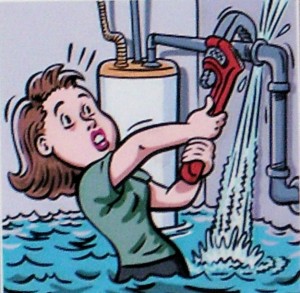
My horror story about the garage is not as bad as a friend of mine’s. She left on vacation for two weeks and came back to find out her hot water heater had exploded and her entire garage was covered in a thick layer of mold. Ew!
My problem was not due to the water heater, though I know they can be a big leak danger. Mine was due to the air conditioning unit located above the garage. One hot summer the drainpipe got clogged up and the drip pan could not handle the overflow. Water dripped from the garage ceiling and turned a flat ceiling into a threatening bubble of dampness. Thankfully I was able to get everything out of the way before it collapsed onto the floor.
After getting the air conditioner repaired I called out cleaners to make sure the water damage had not spread to more of the ceiling and to clean up the parts of the carpet that had been damaged due to the water. I also had to get a Garage Door Opener Repair too as the water had affected the motor but it was easy to fix. I did not want to get into the fiberglass insulation either. After replacing the ceiling everything thankfully went back to normal.
As you can see, leaks can cause a lot of damage to your home. Even small ones. You need to take water damage seriously as it can lead to all kinds of health risks and complications. Call in professionals to help you with clean up and make sure the job gets done right.
Author Bio:
Ken holds a master’s in business leadership from Upper Iowa University and multiple bachelor degrees from Grand View College. As president of morningsidenannies.com, Ken’s focus is helping Houston-based parents find the right childcare provider for their family. When he isn’t working, he enjoys spending time with his three children and his wife.
When You Would Rather Not
Coastal homes need more upkeep than most. Damp air, salt, and constant tracked-in rain mean a house here needs attention a house in a dry climate does not.