
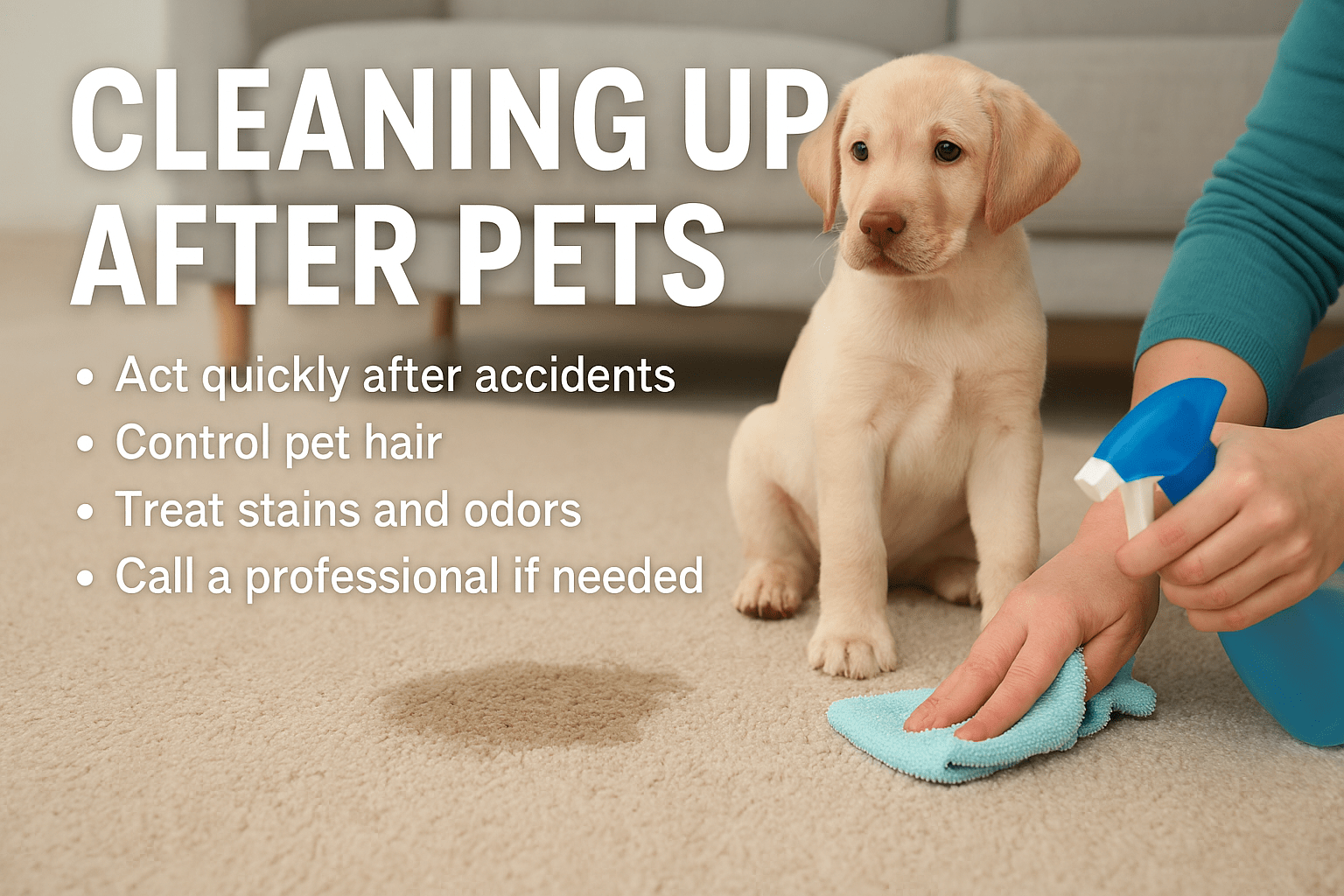
We love our pets—but accidents, shedding, and odors are part of the deal. Whether you’re dealing with a puppy in training, an older pet, or the occasional unexpected mess, acting quickly is the key to protecting your carpets, furniture, and indoor air quality.
Pet accidents don’t just create visible stains. Liquids can soak deep into carpet fibers and padding, leading to lingering odors and repeat soiling if not handled correctly. The good news? With the right approach—and fast action—you can minimize damage and keep your home clean and fresh.
Step 1: Act Immediately After an Accident
When a pet accident happens, time matters.
- Blot, don’t scrub. Use clean white towels or paper towels to absorb as much moisture as possible. Scrubbing can push liquids deeper into the carpet backing, making odors harder to remove. [bissell.com]
- Dilute the area. Lightly apply cold water and blot again to help reduce concentration before stains set.
- Neutralize odors early. A mild solution of white vinegar and water can help neutralize smells and break down residue before it dries. [wikihow.com]
Fast response significantly reduces the chance of permanent staining or recurring odor issues. [flooringclarity.com]
Step 2: Control Pet Hair Before It Becomes a Problem
Pet hair builds up faster than most homeowners realize—especially in carpets, upholstery, and air vents.
To stay ahead of it:
- Vacuum frequently using a high‑suction vacuum with a beater brush.
- Use pet rakes or rubber brushes to lift embedded hair from carpet fibers without damaging them.
- Lint rollers, velour brushes, or pet hair sponges work well on furniture and stairs.
- Air purifiers with HEPA filters help remove airborne dander and hair, improving indoor air quality—especially helpful for allergy sufferers.
Regular grooming and bathing also reduce shedding at the source, making your home easier to maintain overall.
Step 3: Treat Stains and Odors the Right Way
Surface cleaning alone often isn’t enough. Pet urine and organic messes can migrate below the carpet surface, where odors linger and reappear—especially during humid conditions. [thestainguide.com]
For best results:
- Use enzymatic cleaners designed for pet accidents. These break down odor‑causing proteins instead of masking smells. [bestvacuumexpert.com]
- Allow proper dwell time per product instructions—enzymes need time to work.
- Avoid steam cleaning until enzymatic treatment is complete, as heat can lock odors in. [carpetclea…valley.com]
Old or recurring odors often indicate contamination in the carpet padding, which may require professional extraction. [carpetclea…valley.com]
Step 4: When DIY Isn’t Enough, Call a Professional
If stains keep coming back, odors return after cleaning, or accidents were left untreated for too long, professional carpet cleaning is the safest option.
Professional hot‑water extraction and pet‑specific treatments can:
- Reach deep into carpet fibers and padding
- Fully neutralize odors at the source
- Extend the life of your carpet
- Restore freshness without harsh chemicals
At A‑1 Cleaning Service, we regularly help Humboldt County homeowners recover carpets affected by pet accidents—before replacement becomes necessary.
Final Tip: Speed Is Everything
The faster you respond to pet messes, the easier they are to remove. Fresh stains are always easier to treat than old ones, and quick action helps prevent long‑term damage, odors, and repeat marking behavior.
If you’re dealing with stubborn pet odors, heavy shedding, or carpet stains that won’t go away, professional help can save you time, stress, and money in the long run.
Need Help With Pet‑Related Carpet Cleaning?
Call or Text A‑1 Cleaning Service at (707) 442‑3229
Visit https://a1clean.com
Serving Humboldt County with trusted, professional cleaning for over 30 years.
